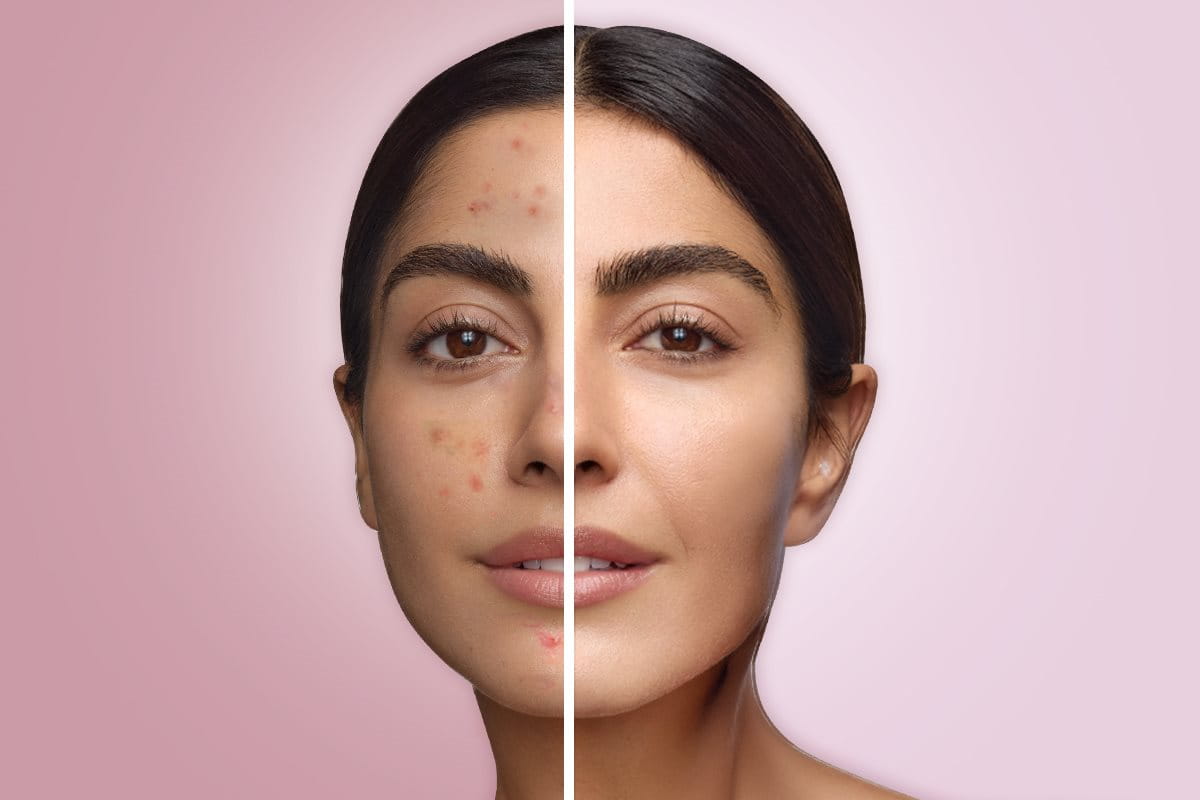
Have you ever wondered if the acne breakouts appearing on your skin are not so random as they seem? What if there was a link to help us understand the significance of location with its underlying triggers? This is the fundamental concept of an acne face map, or face mapping, to put it simply.
While research is still ongoing on the subject, the approach aims to connect specific facial zones to potential internal and external factors that contribute to acne development. Understanding the fundamental idea of where breakouts consistently emerge can help individuals identify patterns that may relate to hormonal fluctuations, lifestyle habits, skincare routines, or environmental exposures.
Intrigued yet? Allow us to detail the basics of the acne map and how you may utilize the concept to frame your skincare routine.
Keynotes:
- Face mapping is a technique that connects acne in specific facial zones to potential internal imbalances or external factors.
- Breakouts in the T-zone are often linked to high sebaceous gland density, stress-induced oil production, or external factors like hair products or headgear.
- Jawline and chin acne are strongly associated with hormonal fluctuations, making these areas responsive to changes during menstrual cycles or periods of stress.
- Acne on the cheeks is often caused by mechanical factors or by exposure to environmental pollutants.
- Effective acne management for acne maps should combine a consistent skincare routine with zone-specific treatments, alongside targeted lifestyle adjustments.